



Applications
Manufacturing Facilities
AGVs are extensively used in manufacturing plants for transporting raw materials, work-in-progress (WIP), and finished goods between production areas, assembly lines, and storage locations. These vehicles navigate predefined paths or routes within the facility, delivering materials to designated destinations and supporting just-in-time (JIT) manufacturing processes.
Warehousing and Distribution Centers
AGVs play a crucial role in warehouses and distribution centers for automating material handling operations such as pallet movement, order picking, and replenishment. These vehicles transport goods between storage locations, picking stations, and shipping docks, optimizing warehouse workflows, and improving inventory management efficiency.
Automotive Industry
In automotive manufacturing plants, AGVs are utilized for transporting automotive components, parts, and assemblies between production lines, workstations, and storage areas. These vehicles support lean manufacturing principles by facilitating the flow of materials and reducing manual handling requirements in assembly operations.
Food and Beverage Processing
AGVs find applications in the food and beverage industry for automating material handling tasks in processing plants, breweries, and beverage facilities. These vehicles transport raw ingredients, packaging materials, and finished products between production stages, ensuring efficient throughput and minimizing contamination risks
Healthcare Facilities
AGVs are employed in hospitals, clinics, and healthcare facilities for automating the transportation of medical supplies, equipment, and patient materials. These vehicles deliver medications, linens, and medical waste bins between different departments, improving workflow efficiency and reducing manual handling efforts in healthcare settings
E-commerce Fulfillment Centers
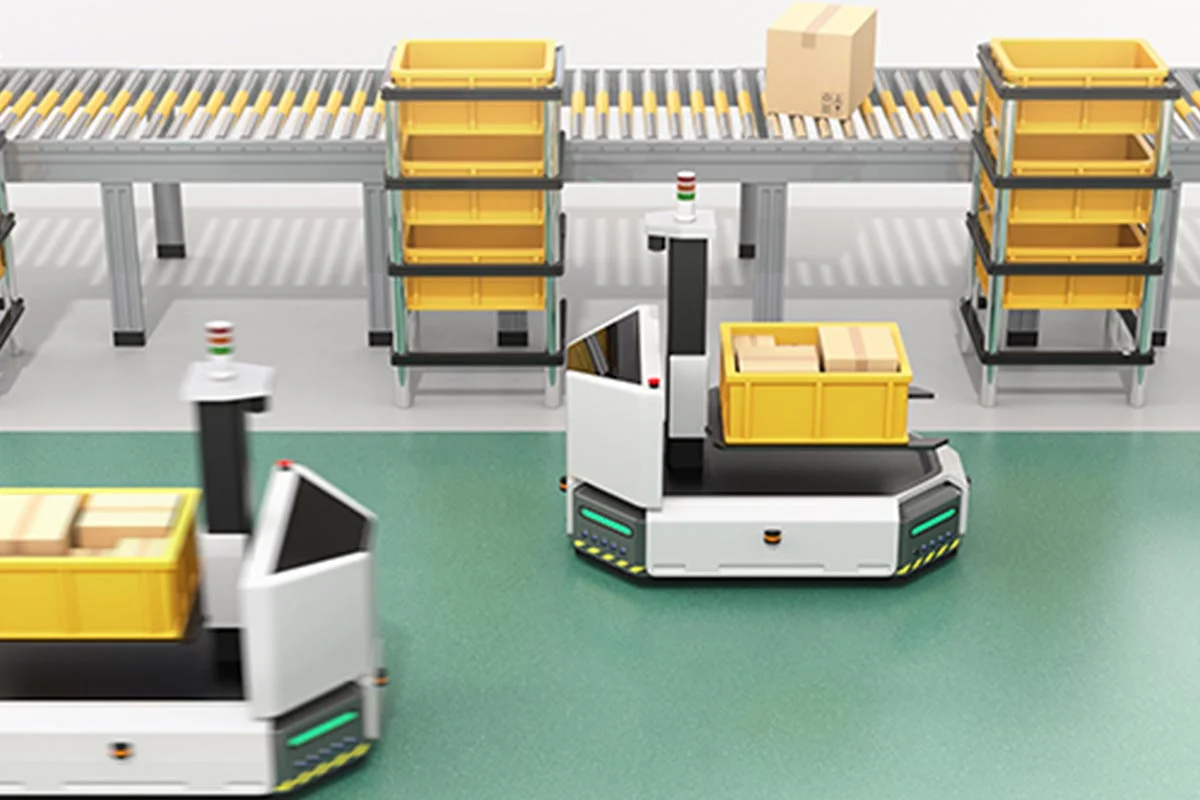
AGVs play a vital role in e-commerce fulfillment centers and distribution warehouses for automating order fulfillment and goods-to-person (G2P) operations. These vehicles transport order totes or bins between storage locations and order picking stations, enabling efficient order processing and reducing order cycle times in fast-paced e-commerce environments.
Frequently Asked Questions
An AGV is a driverless vehicle that automatically transports materials inside warehouses and manufacturing facilities using laser, vision or magnetic navigation.
AGVs are widely used in manufacturing, warehousing, logistics, FMCG, food processing, pharmaceuticals, automotive and e-commerce fulfilment.
AGVs reduce manual handling, automate repetitive transport tasks, improve material flow, minimize errors and increase operational productivity.
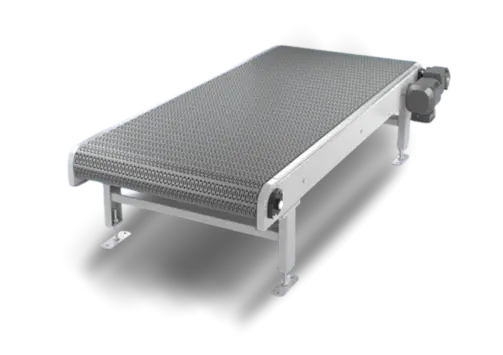
Yes. AGVs can integrate with belt conveyors, pallet conveyors, vertical lifts and warehouse automation systems.
Yes. Bricspac AGV systems can be integrated with Warehouse Management Systems (WMS) and ERP platforms.
AGV factory automation automates the movement of raw materials, components, and finished goods between production lines, assembly stations, warehouses, and dispatch areas. This reduces downtime, increases productivity, and improves overall manufacturing efficiency.
AGV warehouse systems are widely used in manufacturing plants, distribution centers, logistics warehouses, e-commerce fulfillment centers, pharmaceutical warehouses, food and beverage industries, automotive manufacturing, and FMCG warehouses.
Warehouse logistics AGVs can automate pallet transport, carton movement, raw material handling, finished goods transportation, warehouse replenishment, production line supply, and order fulfillment, ensuring smooth and efficient material flow.
AGVs can use laser guidance, vision systems or magnetic guidance depending on the application.
Yes. AGVs are designed for continuous operation with battery charging and fleet management capabilities.
Yes. Bricspac provides installation, commissioning, operator training and nationwide service support.
Yes. Vehicle capacity, navigation, software integration and workflows are customized for each facility.
Bricspac delivers customized AGV systems with turnkey integration, Industry 4.0 capabilities and nationwide engineering support.
AGV warehouse automation offers numerous benefits, including reduced labor costs, improved warehouse safety, faster material transportation, increased inventory accuracy, 24/7 automated operation, better warehouse space utilization, reduced product damage, and higher operational efficiency.
Businesses should invest in AGV warehouse automation because it reduces manual handling, lowers operating costs, improves workplace safety, increases productivity, optimizes warehouse space, and supports scalable automation for future business growth.
Yes. AGV systems can seamlessly integrate with Warehouse Management Systems (WMS), Enterprise Resource Planning (ERP) software, conveyor systems, barcode scanners, and other warehouse automation technologies for real-time inventory tracking and material movement.